
Case study 02 · Real estate & hospitality · Medellín, Colombia
Back on page one in aweek, after a year away.
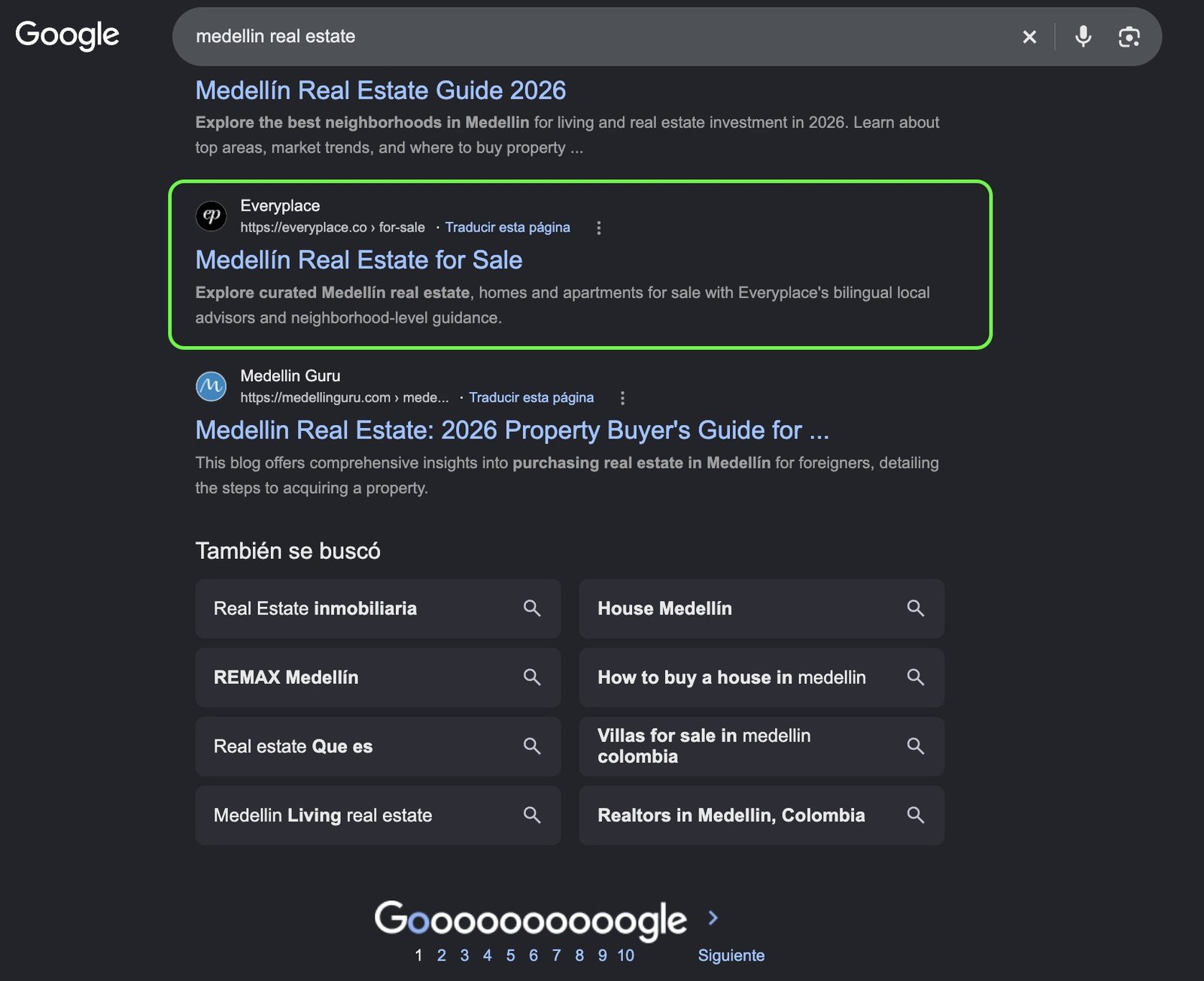
Built from scratch in 2023, on page one by the end of 2024 — then a premium agency rebuild broke the architecture, the rankings went, and nine months passed without a lead. One week after the new site launched: page one again, and two qualified leads.
- 1 wkBack on page one“Medellín real estate” and related searches
- 2Qualified leadsin the first week after relaunch
- ~1 yrOff page one beforeafter a third-party rebuild
- 9 moWithout a lead beforefrom the previous site
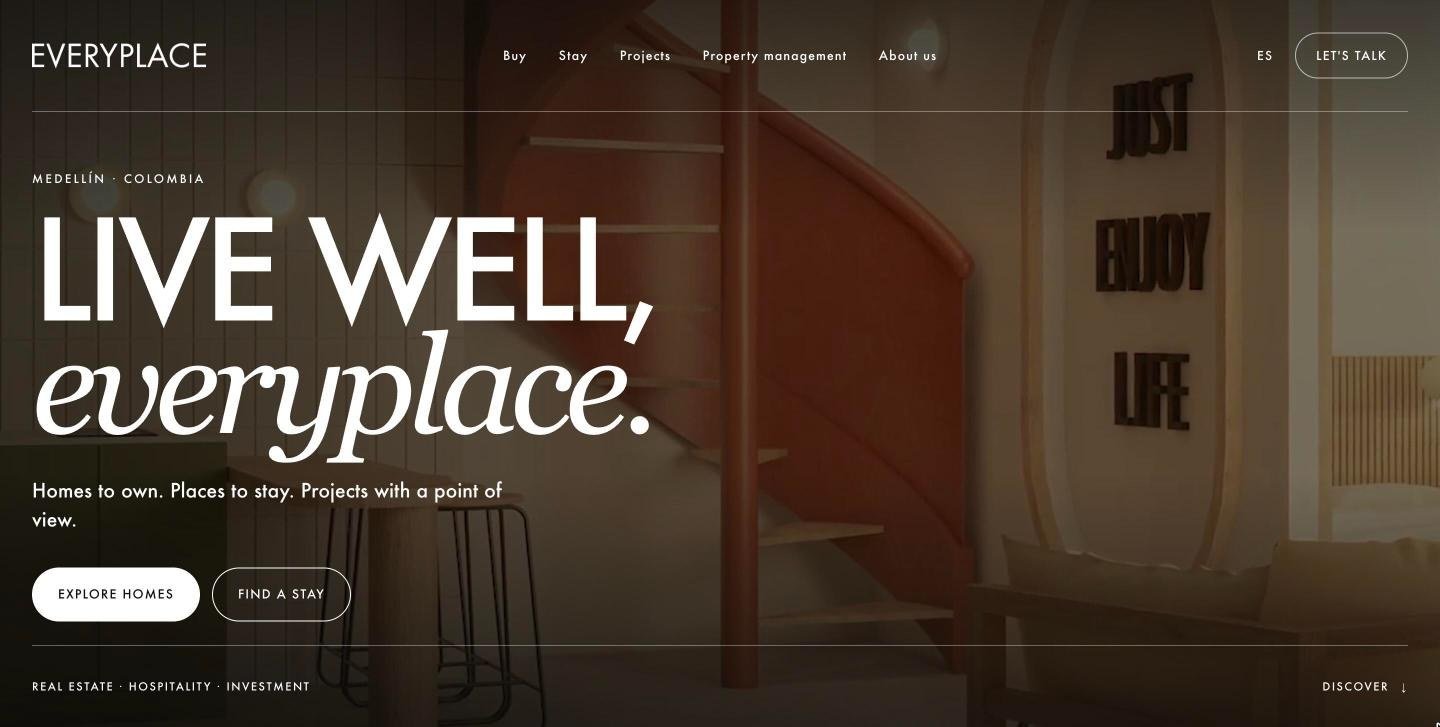
Everyplace is a real estate and hospitality team in Medellín. They sell homes, host stays, market new projects to investors and manage properties for owners. Four businesses, one brand, and a website I know better than almost any other, because I built the first version of it from scratch in 2023.
This is not a story about ranking a site for the first time. It is a story about losing a position it took a year and a half to earn, and getting it back in a week. The second part only worked because of what was learned in the first.
How the rankings were lost
2023 to 2024: earned, slowly. We started with nothing. By the end of 2024 Everyplace was on page one of Google for "Medellín real estate" and the searches around it, and it stayed there through 2025. That is what patient, research-first work looks like: eighteen months to reach the front page, then a year of holding it.
Late 2025: the rebuild. Towards the end of 2025 the company had the site rebuilt by a web development agency, at a premium fee. The new design was not remarkable, and the cost of it was invisible to anyone who was not looking at the search data: URLs changed without a map, the page architecture that had earned the rankings was flattened, and the SEO foundation went with it. Within weeks the site had dropped off page one. It stayed off for roughly a year.
Nine months without a lead. Rankings are abstract until they stop. The site went nine months without producing a single qualified lead. For a team whose buyers are often abroad and find them by searching, that is the difference between a website and a brochure nobody opens.
What I built
A radical fix, not a patch. There was no version of the agency's site worth saving, so we redesigned everything: a homepage organised around intent (buy a home, stay awhile, invest forward: three doors on the first screen), editorial design instead of a listings grid, real writing about neighbourhoods and living in Medellín, and a bilingual structure where Spanish and English stay synchronised instead of drifting apart.
A private sales workspace with an AI assistant. The team signs into a protected portal with inventory, drafts, leads and roles. An agent enters the essentials of a property and the assistant writes the title, the description and the structured details, ready to review and publish. Adding a listing went from an afternoon to a few minutes, and 275 properties now live in that workspace.
The part that actually recovered the rankings. Here is the thing most redesigns get wrong, and the reason this one worked in a week instead of a year. Everyplace still had two assets the agency's rebuild had not destroyed: the authority the domain had earned since 2023, and two years of Search Console data. That data told me exactly which pages had ranked, for which queries, and where the old URLs had been. So the migration was not guesswork: every old address was redirected to the right new page, and every important page was rebuilt around the queries it had already proven it could win. In effect we handed Google a clear, verifiable statement: this is the same business you already trusted, here is where everything lives now.
What happened in the first week
Back on page one in seven days. One week after launch the site was on the first page of Google for "medellin real estate" and the searches around it, a position it had not held for about a year. Google did not have to rediscover Everyplace; it had to be shown, unambiguously, that Everyplace was back.
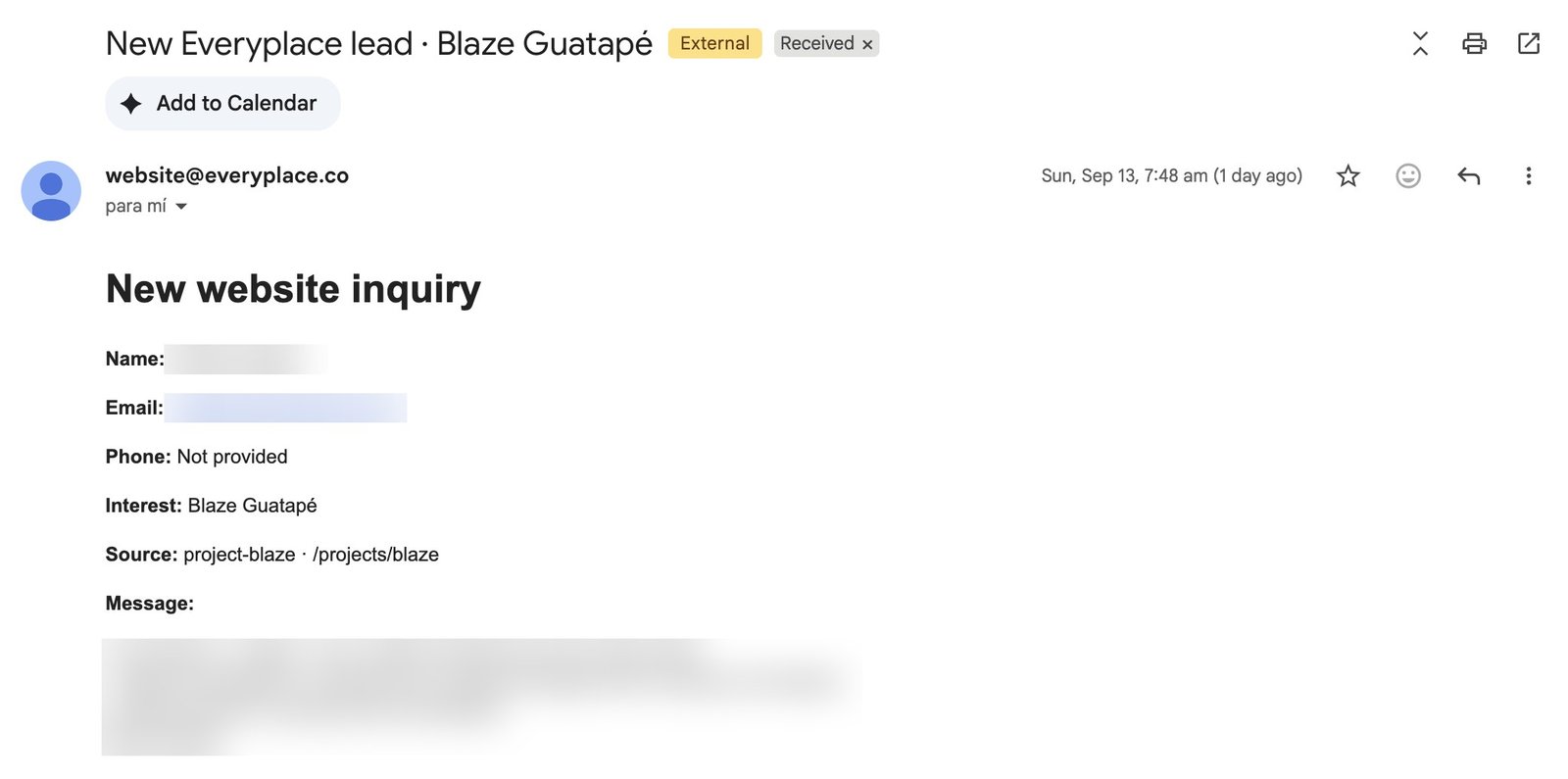
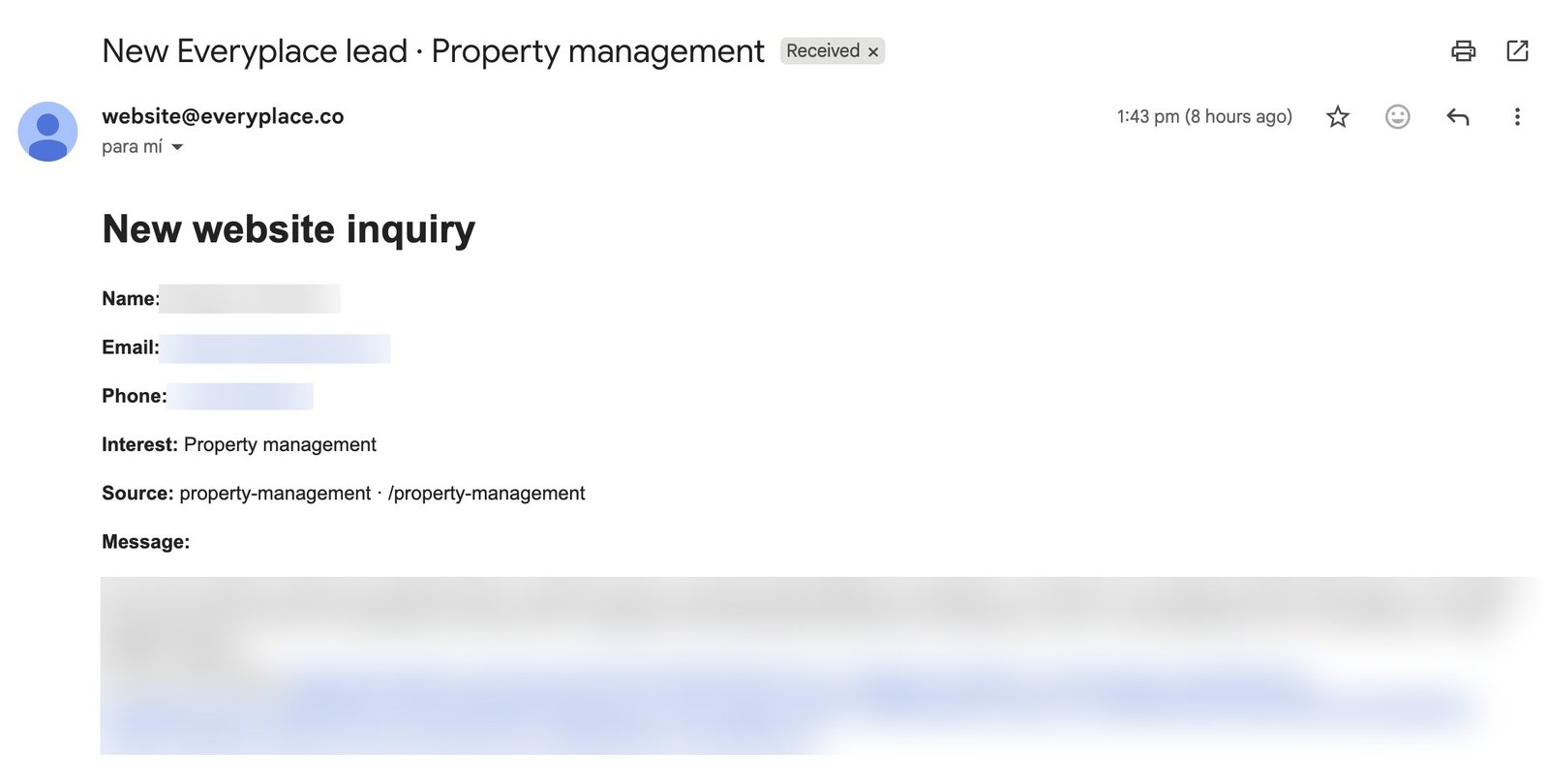
Two qualified leads in the same week. After nine months without one. Nothing about the Medellín market changed in those seven days. What changed is that the people searching could find Everyplace again, and when they arrived they landed on a page built around what they came for, with inventory that was current. The two requests also show the new architecture doing its job: one came through a project page, from an investor abroad; the other through the property-management page, from an owner in El Poblado. Two different doors, two different intentions, each landing where it should.
A site the team can run. Drafts, approvals and live inventory are separated, publishing takes minutes, and nothing goes live before someone signs off. The rankings came back to a site that can keep earning them.
What this project taught me
Two things made this result, and only one of them is technical. The technical one: a domain's authority and its Search Console history are assets, and a migration built on that data can restore in a week what a careless one destroyed in a month. Google keeps a long memory of who earned its trust; it only needs a site it can read and a map it can follow.
The other is Everyplace itself. People prefer them because of who they are, how they treat buyers and guests, and the brand they have built over years in the city. Search engines exist to connect people with what best satisfies them, and Everyplace is that answer for a lot of people looking at Medellín. My job was to stop a bad rebuild from hiding it. The lesson about Google is the same one this whole book is about: it rewards the real thing, and it will find its way back to it if you give it a clear path. Chapter 5 covers the architecture; Chapter 7 is about the data that made the recovery possible.
Google did not forget who Everyplace was. It just needed a site it could read again — and the data to prove it was the same business.
Alejandro Muñoz
About this work
This project was led by Alejandro Muñoz. The method behind it is the one described, chapter by chapter, in Search Marketing: A Practical Field Guide, free to read and listen to on this site.
Want this done for your market?
A private 60-minute strategy session with Alejandro Muñoz: research first, no assumptions, and a clear view of which battles are worth fighting.
The method, in full