
Case study 01 · Plastic surgery · Bogotá, Colombia
From zero to twelve qualified leads insix weeks — on the form alone.
A surgeon with no website, two very different audiences and a brutally competitive niche. Six weeks after launch: 16 pages, page one for his name and twelve qualified consultation requests through the form alone, with WhatsApp contacts on top. Two months in: ChatGPT is his #1 source of new visitors (45%), and the United States his #1 country.
- 12+Qualified leads12 form requests in six weeks, plus WhatsApp contacts — well over 15 in total
- 65%of contact actions from ChatGPT13 of 20 WhatsApp, phone, email and form key events, Sep 8–26
- 45%New visitors from ChatGPT84 of 188 users — #1 source, 3.7× Google
- #1Country: United States38% of visitors, ahead of Colombia
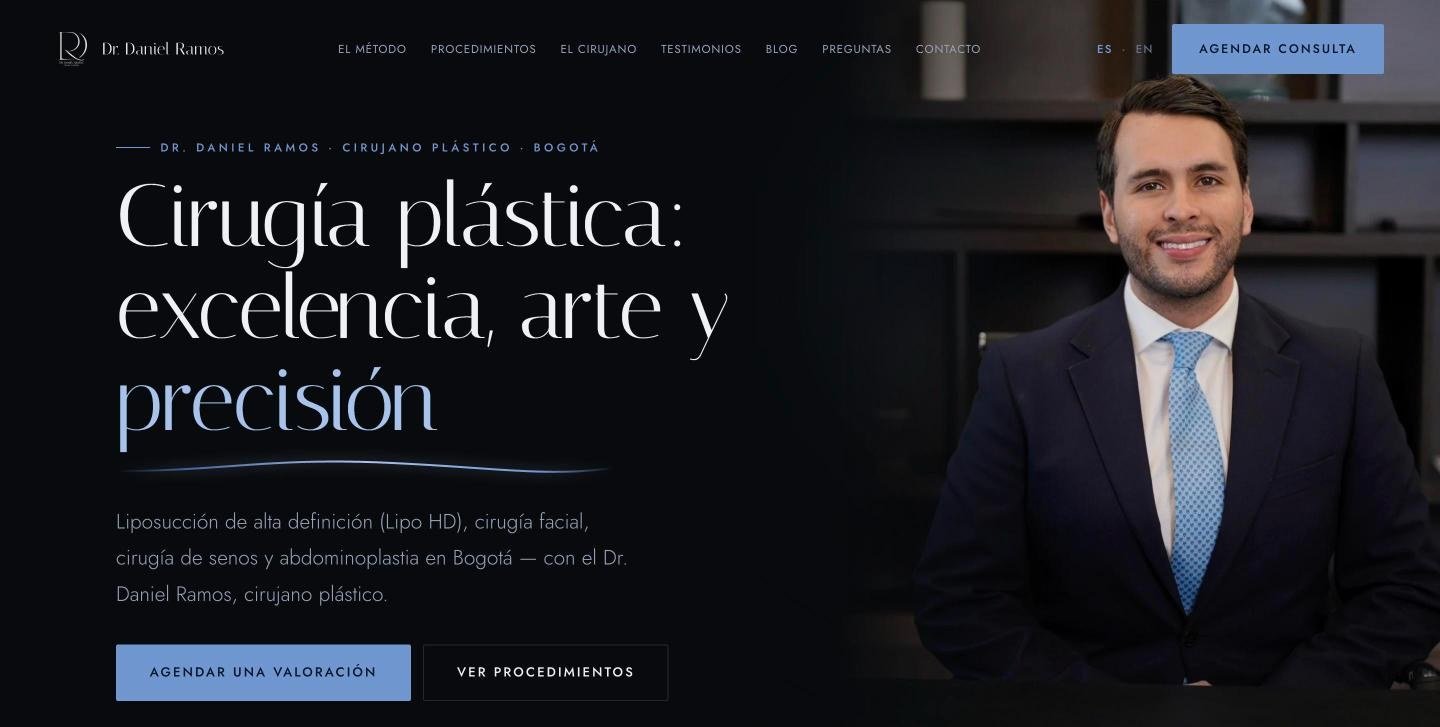
Dr. Daniel Ramos is a plastic surgeon in Bogotá who specialises in high-definition liposuction, BBL and body contouring. When we started, he had no website, no pages and not a single appearance in Google. Patients found him through referrals and Instagram, and that was it.
Six weeks later he had two sites in two languages, sixteen pages that Google had already crawled, a thousand impressions, page one for his own name, and twelve qualified consultation requests through the form from people who had found him online, plus the patients who skipped the form and wrote on WhatsApp instead. One of those twelve came from ChatGPT. This is how it happened, and why the order of the work mattered more than the amount of it.
The situation
Three things made this harder than a normal launch.
There was nothing to optimise. No domain history, no backlinks, no content. Everything Google would ever know about him had to be created from scratch, which also meant every early decision about structure would be expensive to change later.
Two audiences with almost no overlap. A patient in Bogotá searching "lipo HD en Bogotá" and a patient in Texas searching "liposuction in Colombia" want different things, ask different questions and worry about different risks. Translating one site would have served neither.
A crowded niche. Plastic surgery in Colombia is one of the most competitive search markets in the country, with established surgeons and clinics holding page one for the obvious terms. Attacking those head-on with a six-week-old domain would have been a waste of his money.
What I did
Research first. Before anything was designed, I researched how each audience actually searches. The Spanish market was dominated by procedure-plus-city phrases and the surgeon's own name. The English market was dominated by "in Colombia" phrases and price-and-safety questions from people comparing countries. That research decided the page list, the language of every title, and which battles we would not fight yet.
Two independent sites, not one translated site. A Spanish site for local patients and an English site for medical tourists, each with its own structure, its own answers to its own objections, and its own set of target searches. Same brand, two different conversations.
Sixteen substantive pages. A homepage plus dedicated pages for BBL, high-definition liposuction, tummy tuck, male Lipo 360 and penile girth enhancement in both languages. Every page targets a validated query; none of them exists just to fill a menu.
One blog post, chosen with intent. The first article separates gynecomastia from ordinary chest fat, a question with around 4,400 monthly searches in English and unusually weak competition. A new domain cannot win "liposuction" on day one, but it can win a specific question nobody has answered well.
A technical foundation that stays out of the way. Pages load in roughly 0.2 seconds, both domains are secured and mobile-first, and every page carries complete structured data so Google can read who he is, what he does and where. His Google Business Profile was set up to match the site exactly.
Where it stands at six weeks
Indexed and visible. Both domains reached normal crawl status and recorded 1,023 impressions in the first six weeks. For a brand-new site that is the milestone that matters: Google knows the pages exist and is already testing them.
Page one for his name. The main Spanish page averages position 7.3, which means anyone who hears about him and searches his name finds his site, not a directory listing.
International queries appearing early. The English site is already showing for "liposuction in colombia", "best liposuction surgeon in colombia" and "lipo 360 colombia". Six-week-old content rarely appears for phrases like these; it happened because the pages were built around the exact language of those searches.
A 10% click-through rate from desktop. When the site does appear, one in ten people click. That tells me the titles and descriptions are doing their job and gives us a clear signal about which pages to push next.
Twelve qualified leads through the form, and more through WhatsApp. This is the number that matters to the surgeon. In the first six weeks the consultation form received twelve genuine requests, each one a named person with a phone number, a country and a description of the procedure they want, and a separate spam folder catching the rest. That count is only the form. The site also puts a WhatsApp button on every page, and the surgeon reports that a good share of new patients write there directly instead; those conversations happen on his phone, so I cannot count them the way I count form submissions. What I can say is that the real number of qualified leads is well above fifteen. Every one of them was a patient who did not know he existed in July. Visibility that does not turn into conversations is vanity; this turned into conversations.
Where one of those leads came from
This is the part I did not plan for, and it is the reason I keep updating this page. The site went live at the end of July 2026. By the end of September, two months in, Google Analytics showed ChatGPT as the number one source of new visitors by a wide margin: 84 users whose first ever visit came from an AI answer, 45% of everyone who arrived, ahead of direct traffic (52) and more than three times what Google organic search sent (23). And it is not slowing down: in the last week of the period ChatGPT sent 48 sessions against Google's 20.
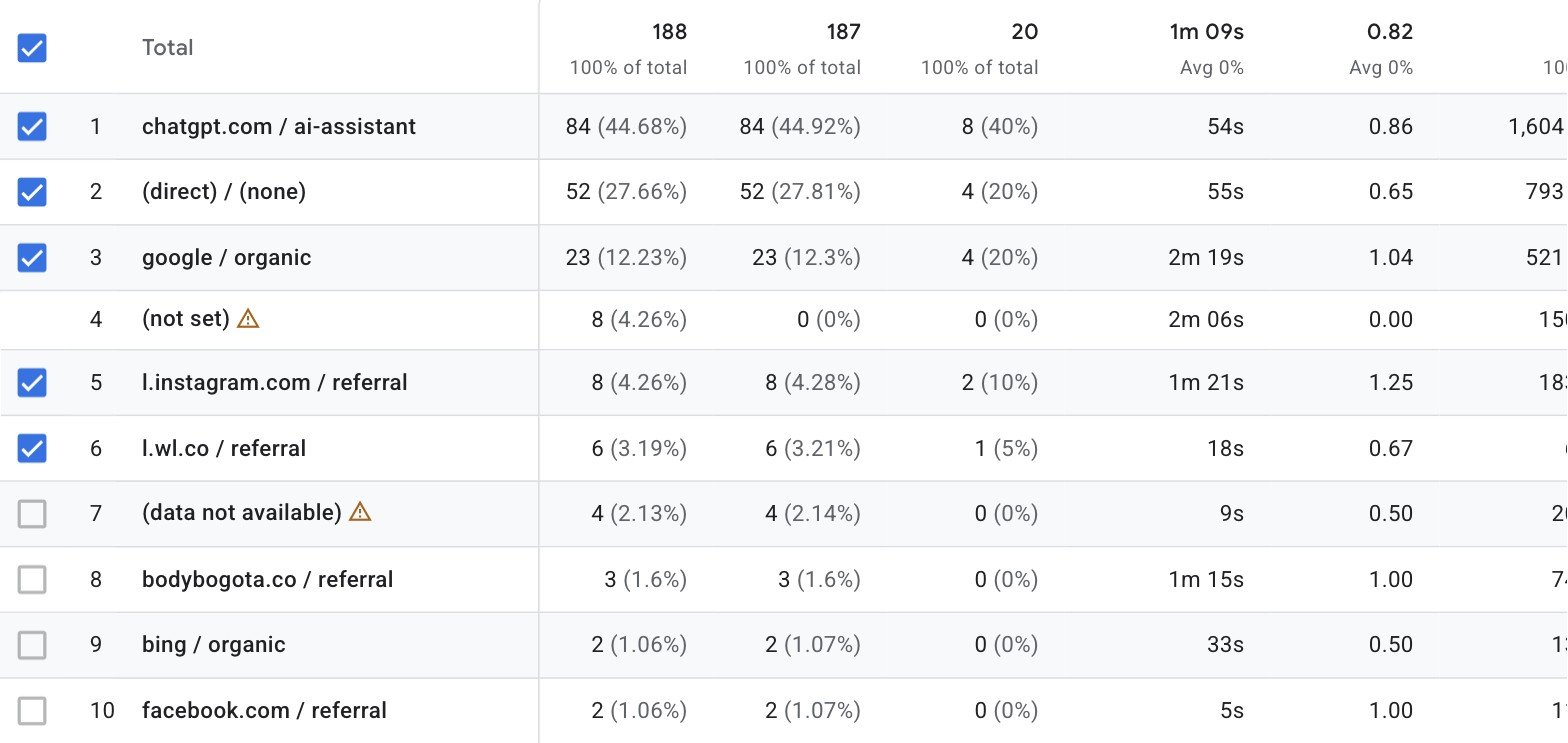
chatgpt.com / ai-assistant accounts for 45% of all new users, more than direct and Google combined would have been a month earlier.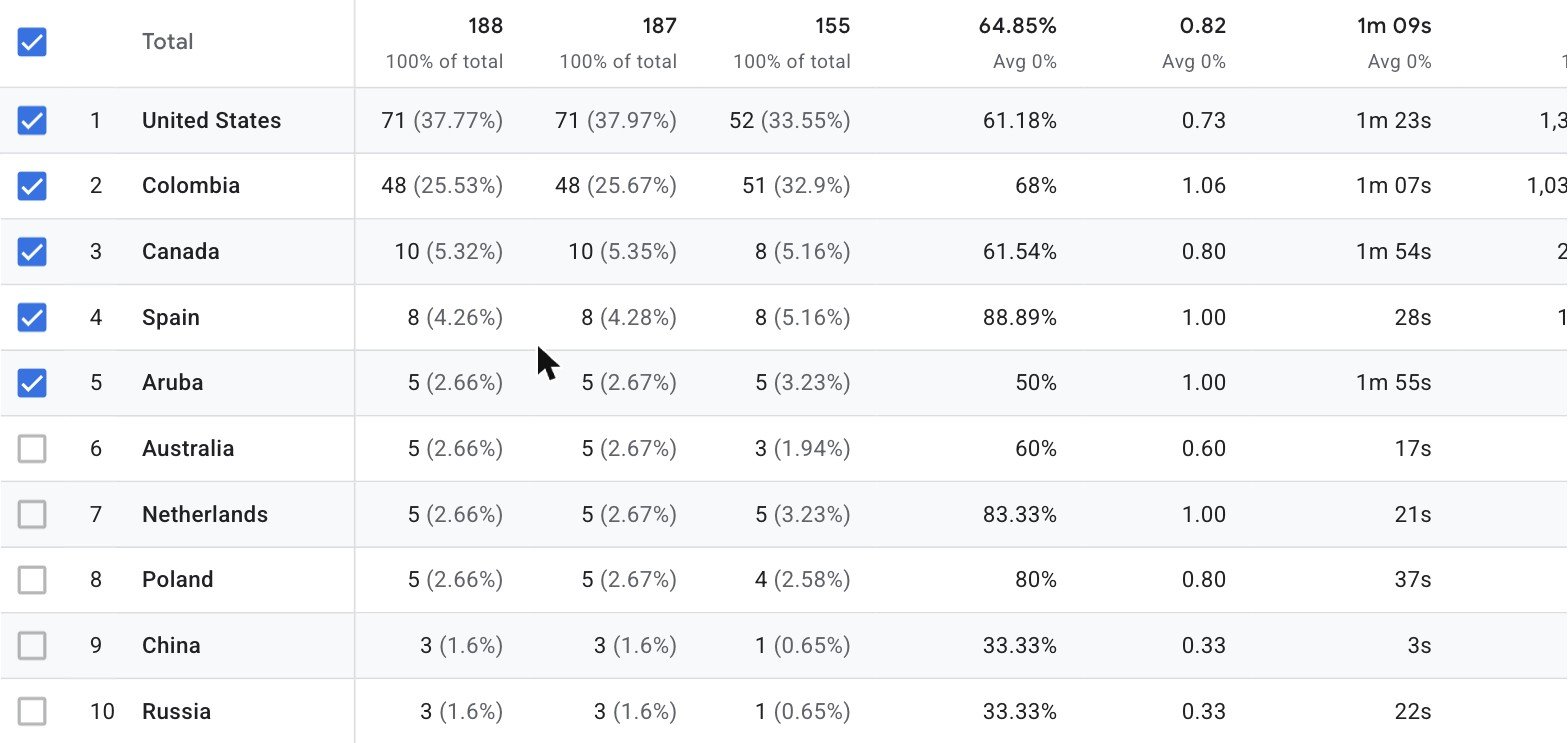
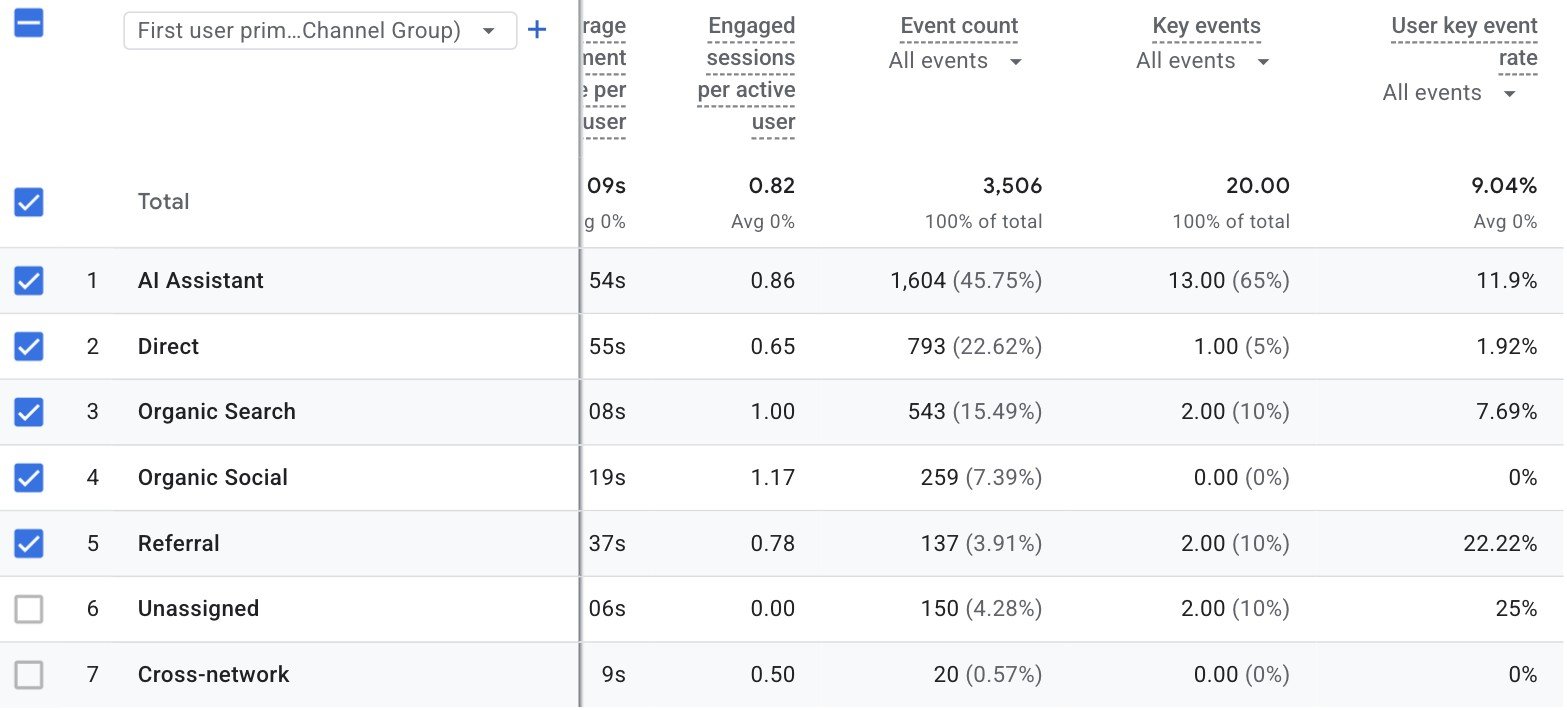
Traffic is only interesting if it does something, so the site tracks every action that means a patient is reaching out: WhatsApp clicks, phone clicks, email clicks and consultation-form submissions, all marked as key events in Google Analytics. Between September 8 and 26 there were 20 of those contact actions, and 13 of them — 65% — came from people whose first visit was sent by ChatGPT. Direct traffic, the second-largest source, produced one. Put another way: a visitor arriving from ChatGPT was six times more likely to contact the surgeon than a visitor typing the address directly.
The first of those conversions was also the most telling. One of the ChatGPT visitors filled in the consultation form. The request came through with the page URL still carrying utm_source=chatgpt.com: a patient in the United States, describing in detail the procedures she wanted, asking the surgeon for his recommendation. That is a qualified medical-tourism lead, from a website that did not exist in July, sent by an AI assistant that nobody paid.
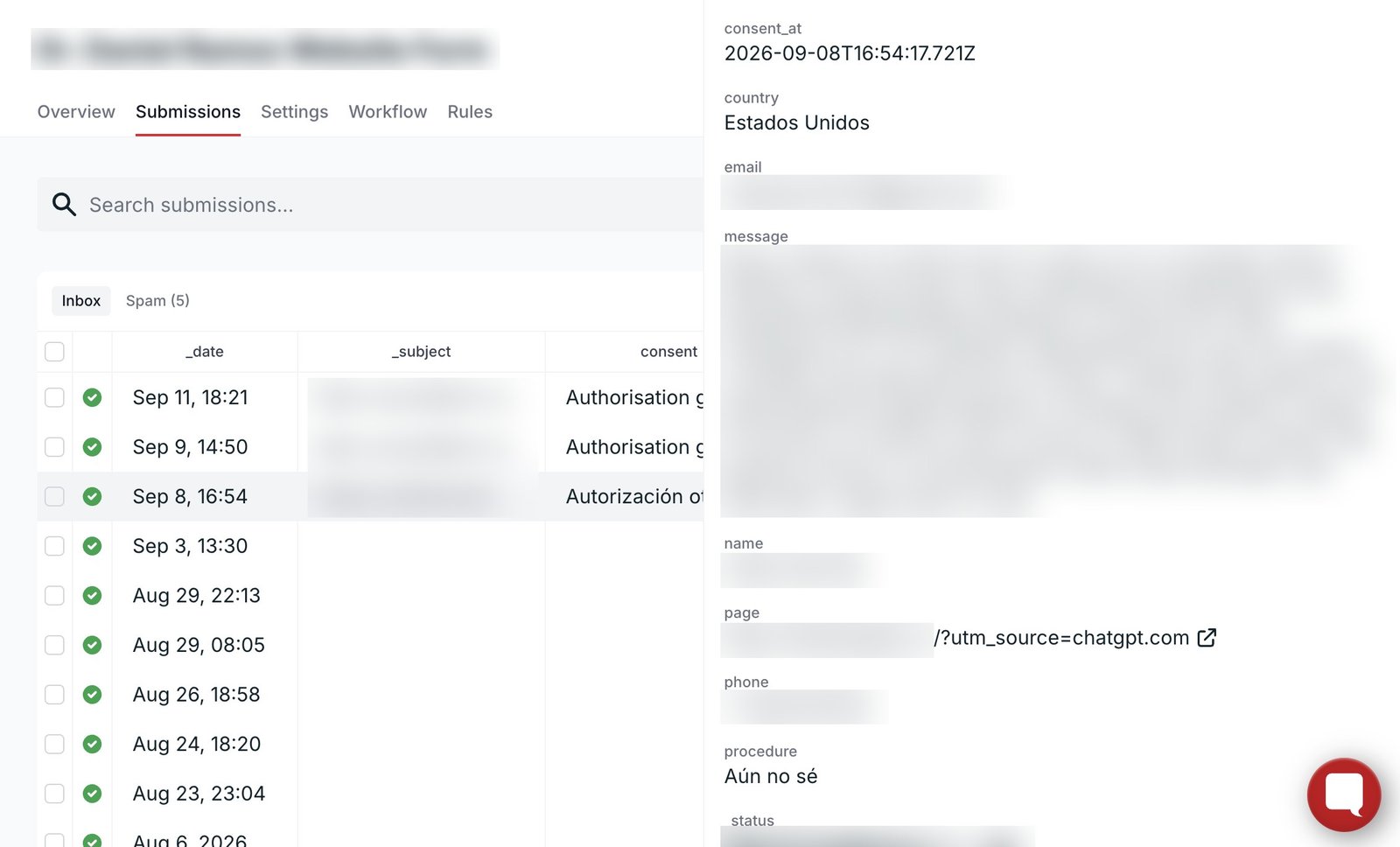
Why did it happen so fast? Because nothing on these sites was built to trick a ranking. Every page answers one specific question in the exact language a patient uses, states who the surgeon is and where he operates, and carries complete structured data so a machine can read it without guessing. Those are the same properties an AI assistant needs when it has to decide which source to retrieve and cite. Search moved behind the answer, and the site was ready for it.
What this project taught me
Starting from zero is not a disadvantage if you refuse to guess. Every page on these two sites exists because the research said someone was looking for it. That is the whole method of Chapter 3 applied to a surgeon instead of a spreadsheet, and it is why a domain with no history was on page one within six weeks, producing twelve qualified form leads (and more on WhatsApp), and being recommended by ChatGPT within two months. Chapter 8 explains why the second result follows from the first.
Twelve leads through the form, more through WhatsApp. Two months in, ChatGPT sends him 45% of his new visitors and 65% of the people who reach out.
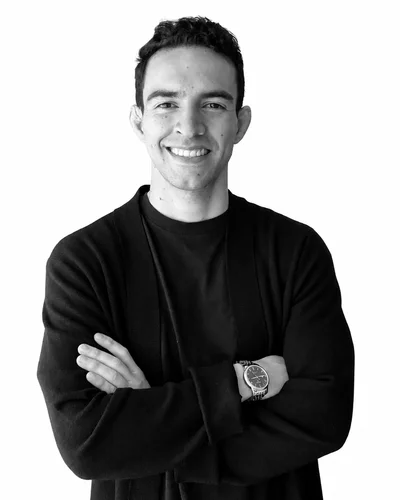
Alejandro Muñoz
About this work
This project was led by Alejandro Muñoz. The method behind it is the one described, chapter by chapter, in Search Marketing: A Practical Field Guide, free to read and listen to on this site.
Want this done for your market?
A private 60-minute strategy session with Alejandro Muñoz: research first, no assumptions, and a clear view of which battles are worth fighting.
The method, in full