Case study 03 · Cattle nutrition · mineral salt · Colombia
Visits from Google tripledin a year.
The website wasn't mine to redesign. The search results were. Twelve months of technical and on-page work took Produgán from 137 to 452 monthly visits and from under 3,000 to more than 30,000 monthly impressions.
- 452Monthly visits from Googleup from 137 a year earlier
- 30K+Monthly impressionsup from under 3,000
- 210KAppearances in Googlelast twelve months
- 5.5Average positionacross all tracked queries
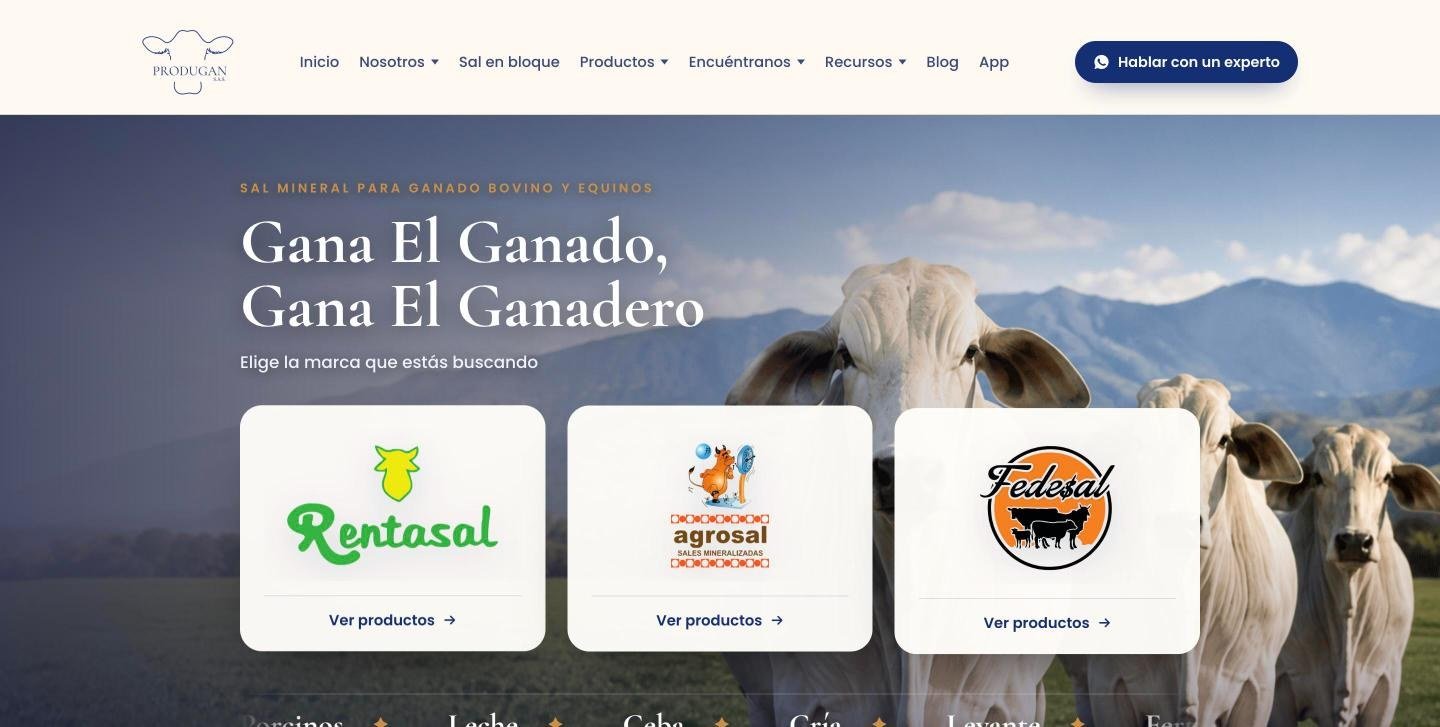
Produgán has been making mineral salt for cattle in Colombia for fifty years, with its own plant and three brands: Rentasal, Agrosal and Fedesal. Farmers know the brands. Google, it turned out, barely knew the website.
I did not redesign anything. The site was not mine to change, and it did not need changing. What needed changing was how Google read it and how it presented it. Twelve months later, visits from Google had tripled and visibility had grown tenfold, with the design untouched.
What I found
Google had no complete map of the site. There was no usable sitemap, so entire pages were simply never discovered. You cannot rank a page Google has never seen.
Product pages missing from the index. The salt pages for horses, pigs and buffalo had no titles or descriptions and had never been indexed. Farmers were searching for exactly those products and finding competitors.
Fifty years of history, invisible. The company's about page, one of its strongest trust signals, did not appear in search at all.
Split authority. One page was showing under the wrong title, and the blog existed at two competing paths, so whatever authority the site earned was being divided between duplicates.
What I did
Gave Google the full map. A sitemap with the 53 addresses that should appear in search, pages, blog and articles, submitted and confirmed as read, with cart and checkout pages deliberately left out so crawl attention goes where it earns something.
Rescued the unindexed product pages. New titles and descriptions for the horse, pig and buffalo salt pages, written in the words farmers actually use when they search, then priority indexing requested for each one.
Rewrote how nine pages appear in results. Titles and descriptions built around the brands and the fifty-year history, sized to fit what Google actually shows instead of being cut off mid-sentence. The pages did not change; the way they are introduced did.
Cleaned up the technical foundation. Canonical tags where they were missing, the duplicate blog paths consolidated into one, internal links added so Google can move through the site the way a visitor would, and headings put back into a proper hierarchy.
Where it stands
First page for the searches that matter. Brand searches sit in the top five, three of them in the top three. Generic product searches, the ones made by farmers who do not know Produgán yet, land between positions three and seven.
Ten times the visibility in twelve months. Monthly appearances in Google grew from under 3,000 to more than 30,000, and clicks tripled over the same period: 137 monthly visits from Google became 452.
Room to grow without moving a single position. With the rankings secured, lifting click-through from 1.6% to 2.5% alone would add roughly 1,800 visits a year. That is the next lever, and it is a writing job, not a rebuilding job.
What this project taught me
Most SEO advice starts with "publish more content." Produgán already had the content. What it lacked was a site Google could read completely and results people wanted to click. Fixing the foundation first, then measuring every month so we could see what moved, is the discipline of Chapter 5 and Chapter 7 in practice. It tripled the traffic of a fifty-year-old company without a single new page.
We didn't touch the design. We changed how Google understands the site — and the visits tripled.
Alejandro Muñoz
About this work
This project was led by Alejandro Muñoz. The method behind it is the one described, chapter by chapter, in Search Marketing: A Practical Field Guide, free to read and listen to on this site.
Want this done for your market?
A private 60-minute strategy session with Alejandro Muñoz: research first, no assumptions, and a clear view of which battles are worth fighting.
The method, in full